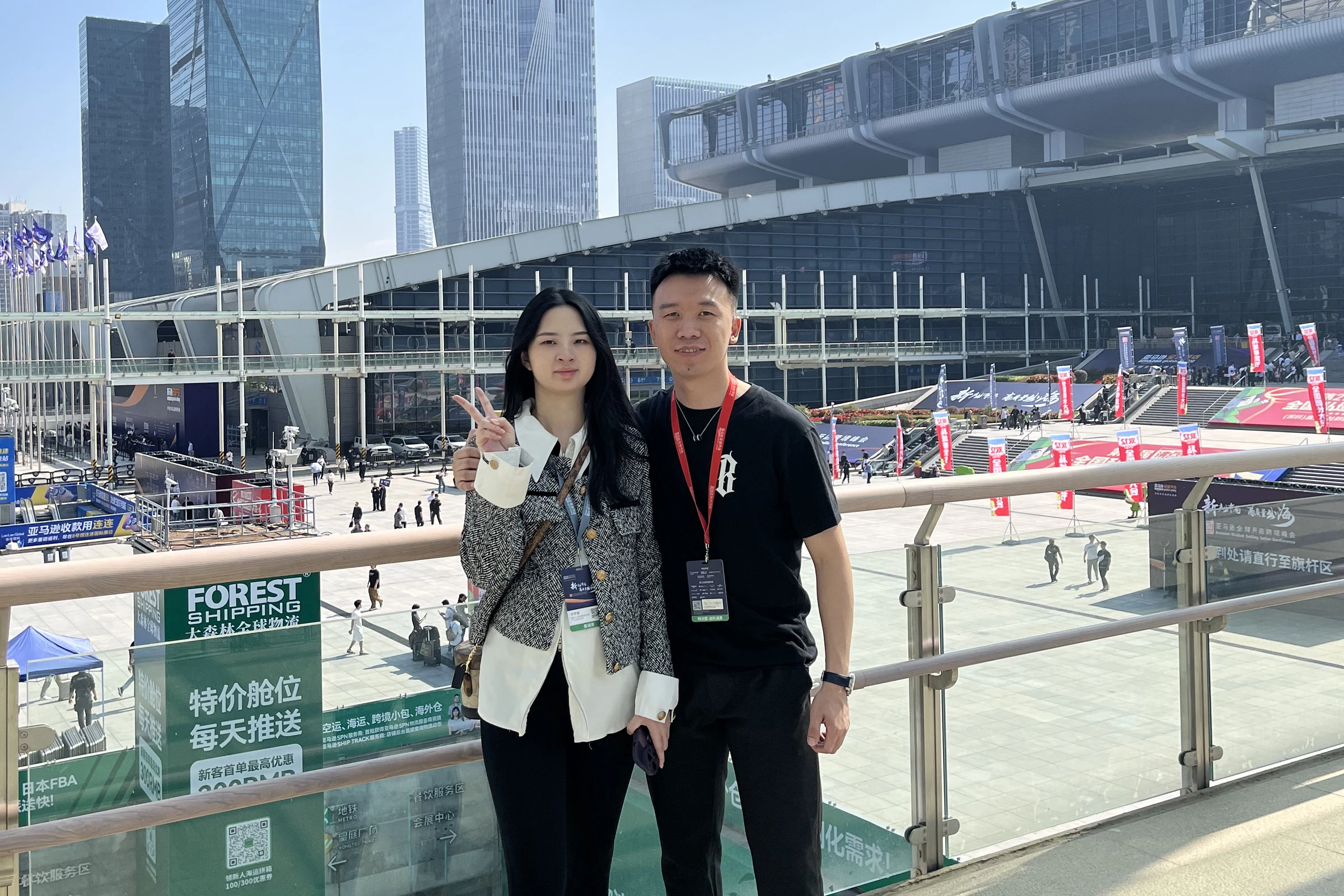
It all started with a plastic box
In 2019, I returned from Shenzhen to my hometown in Guangdong to build a cross-border e-commerce business. One of the reasons I felt ready to take that step was an unlikely product: a plastic shelter for reptiles.
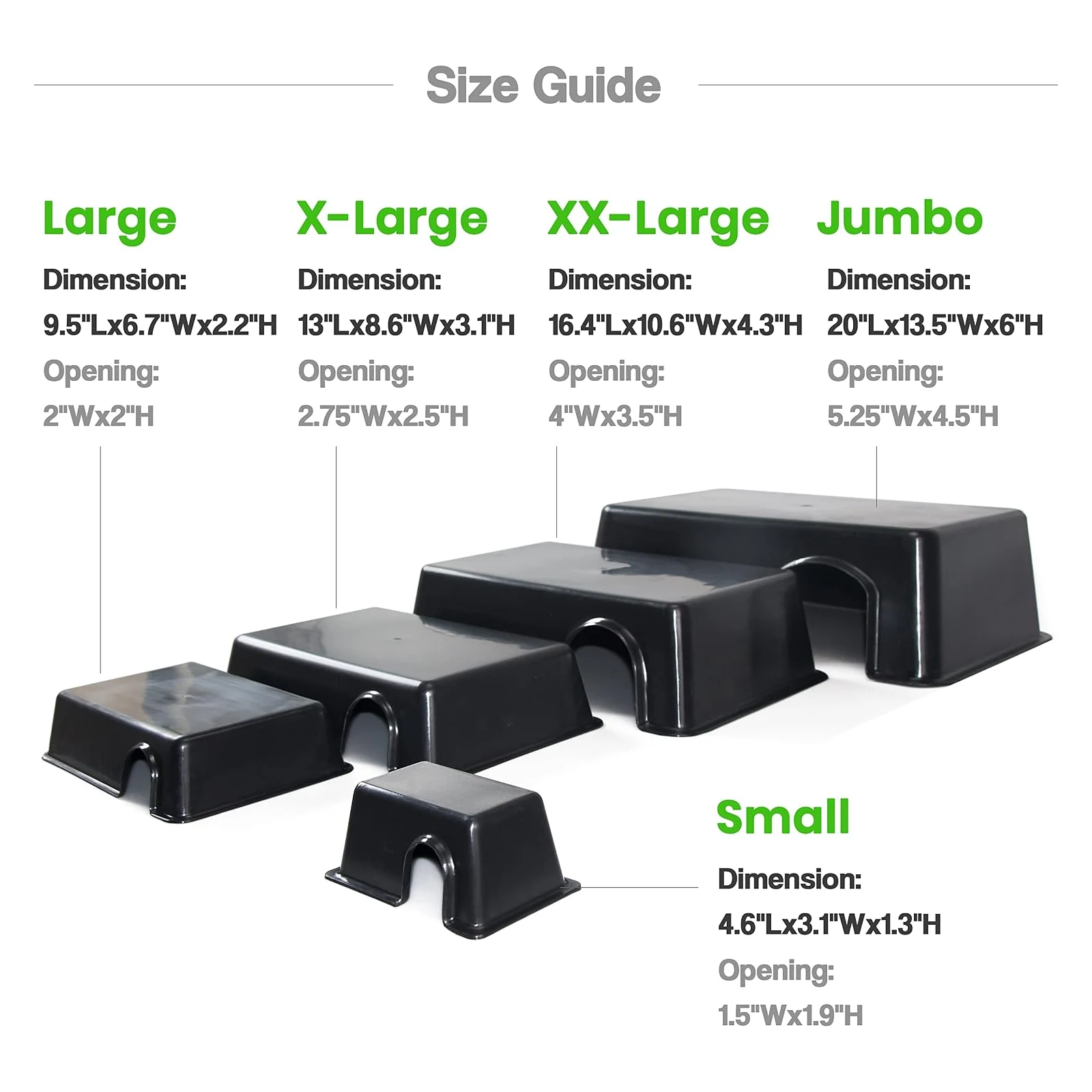
Ball python owners need different sizes of hide boxes as their snakes grow. The largest ready-made version I could source through 1688 in China was 24 cm long. An established American competitor, Pangea, offered 33 cm and 41 cm models. I could improve our listings, keywords and advertising, but none of that could give customers a size we did not sell.
My relative was financing the project while I handled product research and operations. I proposed investing in a mold for the larger sizes. He wanted to wait. I did not want to abandon the opportunity, so I looked beyond China and found a manufacturer in Pakistan with larger boxes already available.
Rather than raise more capital, I used proceeds from the smaller boxes, paid into our Payoneer account by Amazon, to purchase the larger models and have them shipped directly to US FBA warehouses. It was an expensive way to source the product, but it closed the gap in our range. Sales improved considerably, and my relative received more distributions.
After roughly a year, the project had accumulated enough profit to fund tooling in China. I purchased samples from the United States to study dimensions and worked with a domestic mold manufacturer. Our unit purchasing cost fell from several US dollars to a few Chinese yuan. According to my historical records and recollection, annual sales of this product later stabilized at around $200,000.
This was my first experience of a blue-ocean opportunity. To me, that does not mean a market without competition. It means finding an unresolved problem in a market that already exists, and developing a better way to serve it. I began to wonder whether I could repeat the process with other products.
More opportunities than capital
By 2021, I could identify more promising products than I had the money or time to launch. Inventory, freight, advertising and working capital all mattered; tooling made some opportunities even more expensive. There were also the practical tasks of finding suppliers, preparing listings, arranging shipments and running campaigns.
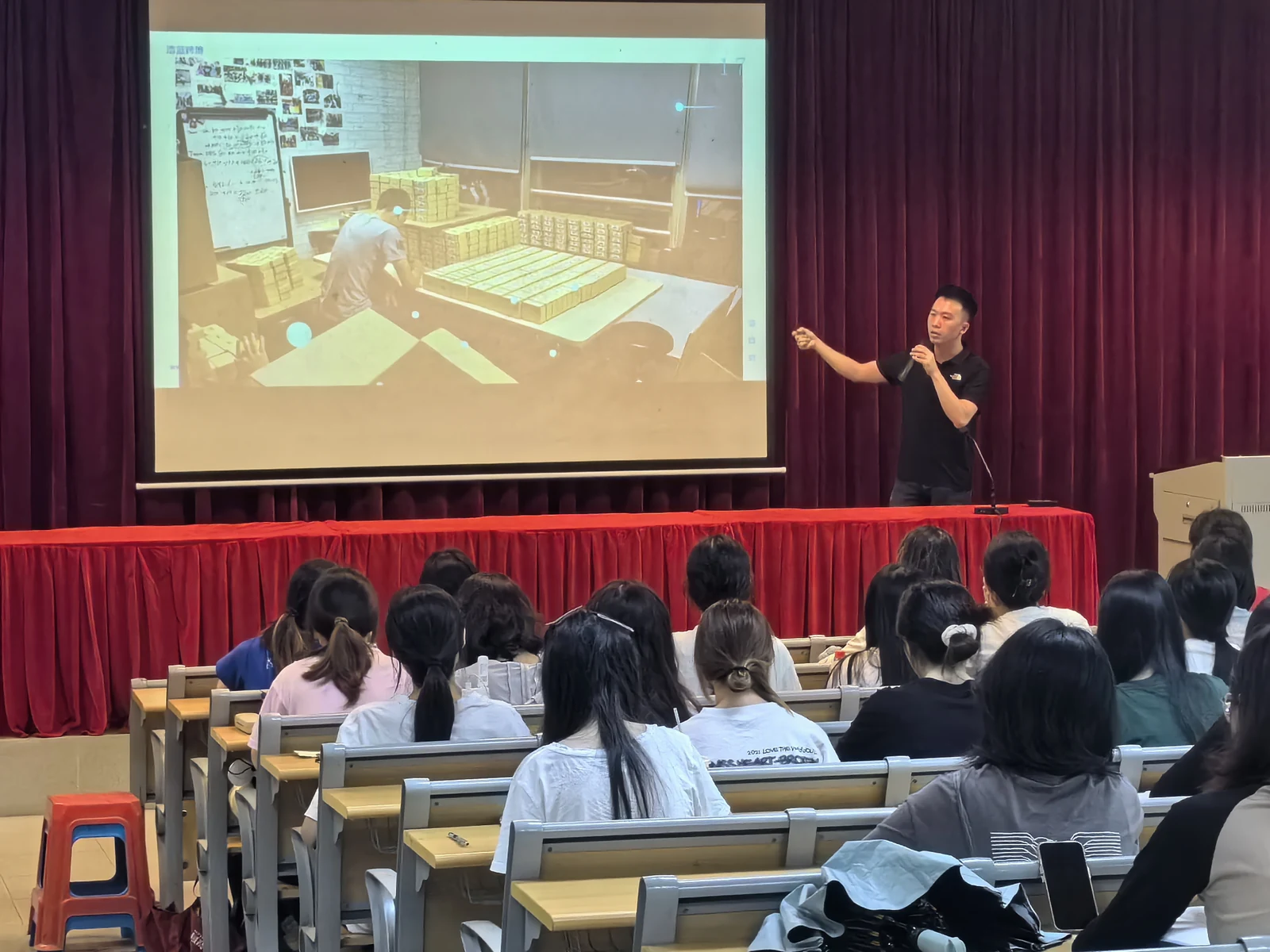
An old classmate, A-Zhong, asked me how to get started with cross-border e-commerce. As I taught him account registration and product research, I realized that I could organize what I had learned into a method and share it with others. Teaching could also help me finance future products.
I developed two courses. The first covered product discovery and development: where to look for opportunities and what criteria to use when evaluating them. The second covered keyword research. A customer searching for “bao basket” and another searching for “bamboo steamer” may want essentially the same product, but their searches represent different routes into the market. I taught students to identify these keyword clusters and use them as the foundation for listings, indexing and advertising.
The courses were released on Douyin, and some students responded well to the underlying logic rather than just the operating instructions. More importantly, the videos brought potential business partners. Some viewers wanted to invest in products instead of learning to operate Amazon accounts themselves.
I gradually stepped away from training and devoted more time to partnerships. I thought I had found a solution to my capital problem. What I had not anticipated was the management problem that would follow.
My first attempt at building a business with someone else
In April 2021, a young man I will call Lin and his parents approached me. They wanted me to guide him through starting an Amazon business and share the proceeds once it became profitable. I wanted to demonstrate results first. We did not agree on the precise distribution terms or sign a contract.
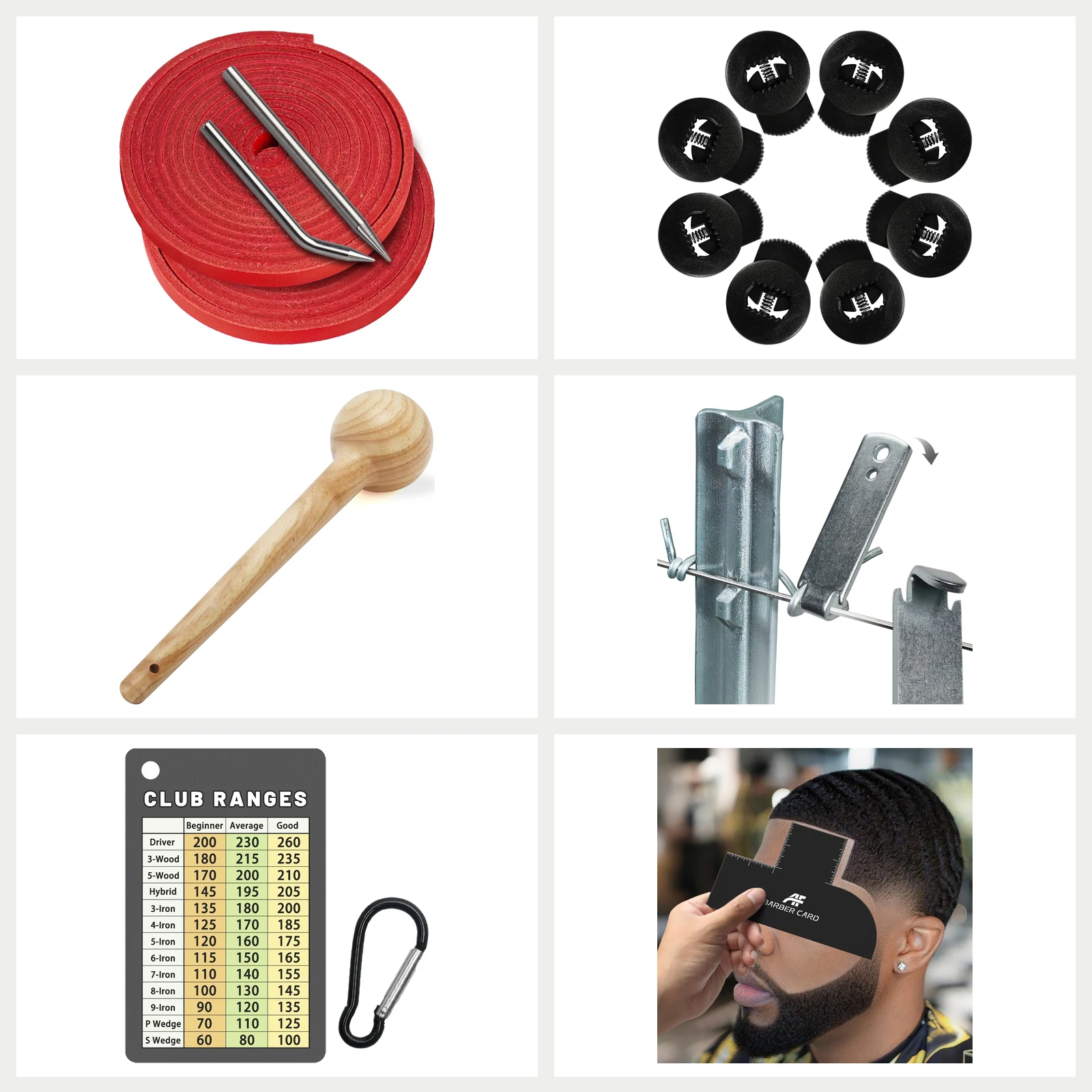
In May, I sent Lin a product research document that included baseball glove accessories. Leather laces wear out and break; players need replacement laces, fasteners and glove-shaping mallets. I recommended that he purchase glove fasteners and passed along some opportunities I had originally intended to pursue myself, including the mallet samples I had bought.
I taught him keyword research, listing copy, images, advertising and shipping, while he mainly handled factory sourcing. By October, his account's monthly profit had passed RMB 10,000, according to my recollection. By April 2022, its monthly sales exceeded $20,000 in the figures I had at the time.
The profit-sharing arrangement never developed as I had expected. The remote access password was subsequently changed, and I could no longer participate in the account as before.
I had helped a product business grow, but I had not established how I would share in the value it created. The absence of clear agreements and account access arrangements was a risk I had accepted at the beginning. I would encounter a version of this problem again.
A partnership that worked
While working with Lin, I began offering managed e-commerce services. Instead of funding every product myself, I would handle product research, development and ongoing operations for investors who supplied capital and accounts. The model involved service fees and, where agreed, a share of profits.
My first client under this model was the owner of a wedding planning company, whom I call Sister Xi. We began working together in February 2022. The first product I recommended was a tool for fastening wire clips to T-post fences, a familiar task on American farms but an unfamiliar product for many consumers in China.
An established tool I studied sold for $18.99. After examining how people used it, we chose a different tool solution. Our purchase cost was approximately RMB 1 per piece, and we offered a two-piece pack for $11.99. I believed the approach offered convenience and good value. The product performed well during its first year.
One memory captures what that period was like. To avoid running out of stock, Sister Xi and I drove to a factory in Dongguan to collect inventory. We packed products in the car as we made our way to a freight forwarder's warehouse in Shenzhen. We were trying to protect the sales momentum we had worked hard to establish.
The project built trust between us. Later, when I got married, I asked her wedding team to organize my own wedding. That relationship showed me that a commercial partnership could create value for both sides and extend beyond the transaction itself.
As the number of projects grew, however, I needed someone who could share the work of product research and operations.
An old friend and a new venture
A-Yu had been my desk mate in high school. He had attended my university graduation and had been there when I was struggling with the earlier partnership. In April 2022, he asked me to help him start an Amazon business and proposed giving me a 35% share of the profits.
He put in RMB 60,000, his savings at the time. I treated his account almost as if it were my own. Another former classmate, Xiao-Ting, became the legal representative of a company in Guangzhou under the arrangement, with an agreed 5% distribution. We also considered another account involving her sister, A-Jing, but did not proceed with that plan.
The baseball glove accessories market was already established, and Lin's account had a considerable head start in orders, rankings and reviews. Rather than compete simply on price, we developed mixed-color fastener packs, including a blue-and-pink combination, and worked on a one-piece glove mallet to address complaints about loose connections in existing designs. Replacement laces proved less differentiated and performed more modestly.
Capital was still tight. I invited A-Yu to participate in my managed-services business, offering him a separate 20% distribution arrangement for that work. I paid him roughly RMB 80,000 from service-fee distributions over time, which he reinvested in inventory. When his own account began making money, I suggested postponing my distributions until the new year so the cash could remain in the business. My team also helped with labor, storage, packing and shipping.
We followed the account closely, sometimes working late to keep up. At the turn of 2023, A-Yu described the preceding year as a major turning point in his career. In early April, our calculation for March showed monthly account profit exceeding RMB 70,000, less than a year after the project began. It was a significant result for a business that had started with limited capital.
When two businesses began pulling in different directions
As A-Yu's own account grew, the managed-services business was falling behind. We had signed up six or seven client accounts, some of which were registered but still waiting for suitable products. I assigned my established reptile hide box to some of those accounts to keep projects moving.
In one instance, a client's inventory had arrived in the United States but its advertising could not run. I only learned of the problem when the investor asked about progress. A-Yu and I disagreed over how the issue should have been communicated.
His own account and our client projects had different economic incentives. I had not established a workable system for deciding priorities when the two competed for his time. Around that period, I also learned that A-Yu and A-Jing had registered another company. I do not regard someone's desire to develop their own business as inherently wrong; my concern was how existing commitments would be fulfilled.
I suggested that if he could not balance both roles, he might focus on his own account. He understood that differently. Our relationship deteriorated, and I again lost access to an account I had helped develop.
About six months later, I brought a lawsuit concerning the profit-sharing arrangement. The identity of the contracting parties, their respective roles and the legal effect of the agreement were disputed. Neither the first-instance nor the appellate outcome supported the distribution claim I had hoped to establish. This is my account of the result, not a substitute for the judgments themselves.
The expected financial return did not materialize, and the loss of longstanding friendships was painful. Looking back, I had placed a great deal of trust in personal relationships without sufficiently clarifying the legal entities, economic rights and operating arrangements. A successful product did not guarantee a lasting partnership.
I needed another partner
After A-Yu left, the clients' accounts still needed to be operated. In 2023, combined sales across the managed client accounts approached RMB 5 million, according to my own historical figures. That was client-account sales, not my company's revenue. It also meant more inventory, advertising and expectations to manage.
I thought of A-Sen, a former middle-school classmate. He had contacted me about Amazon in 2021 and registered an account, but the project had not progressed. In 2023 he returned as a managed-services investor. One of his projects involved the reptile hide box I had assigned to client accounts.
The day after signing his contract, he offered to introduce other investors. He also wanted to learn listing copy and keyword research so he could participate in operations and eventually help expand the business. I asked him to write a listing for a baseball coaching board. His draft demonstrated that he understood the keyword approach I had taught him.
He expressed an intention to offer me a 25% stake in future Amazon-related ventures. That was a proposal, not a completed equity transfer. His initiative encouraged me, and this time I wanted a more formal arrangement. We signed a strategic partnership agreement covering responsibilities and distributions.
I continued teaching him product research, listing preparation and operations while spending more of my own time finding investors and growing the team. I believed I was beginning to build a business that could function beyond my personal output.
Fourteen contracts and a team of twenty
As the managed-services business expanded, we signed fourteen contracts. Under our internal arrangements, I paid A-Sen approximately RMB 200,000 in service-fee distributions. Separately, some clients agreed to share account profits with the company, which could in turn generate internal distributions.
The first product A-Sen selected after joining was a golf club distance reference card. On September 22, 2023, I guided him through the listing process. The project later performed well: according to project calculations, profit was approximately RMB 250,000 in 2024 and RMB 560,000 in 2025. These were project figures, not personal income.
I believed this demonstrated that product discovery could be taught. But subsequent product proposals were not arriving fast enough to meet client commitments. I initially thought too many other tasks were consuming his time. I increased his internal share of client-profit distributions from 20% to 34%, assigned two assistants to handle listing and FBA tasks, and built a dedicated sourcing team to find manufacturers and follow up on samples and product development.
Across the managed-services and sourcing companies, we had around twenty people. The payroll and office costs were substantial for our hometown business. I held meetings, reviewed tasks, arranged training, enrolled in business-school management courses myself, and offered anniversary incentives to encourage progress.
Yet the bottleneck remained. Across fourteen client accounts, new product proposals were too scarce even to provide one for every three accounts. I had to step back into product research myself, selecting items such as accessible parking signs, baseball coaching paddles and basketball court marking stencils.
My ambition had been to create a repeatable system: one person discovers the opportunity, a team develops and sources the product, and operators bring it to market. I had added people and resources, but had not achieved reliable output. That was a management problem I did not yet know how to solve.
The partnership comes to an end
In October 2024, the disagreement between A-Sen and me became an open conflict. I do not intend to reproduce the argument. Some product proposals began appearing afterward, but the relationship did not recover. He left the managed-services project on October 28.
In the following period, I noticed a newly registered e-commerce company and new Amazon sellers in our area. A familiar lanyard in a product photograph reminded me of a listing I had seen from a Shenzhen seller when we were launching the golf card. It raised questions for me about what had been happening while our own projects were delayed.
Similar products and accessories are common in e-commerce. A similar photograph or company registration does not, by itself, establish who controlled an account, what a person intended, or whether anyone acted improperly. I cannot present those inferences as established facts.
The more immediate problem was that I still had to deliver on commitments made to existing clients, with a team that had not developed the consistent product pipeline I had expected.
Three termination notices in one day
In January 2025, a little over two months after A-Sen left, three clients sent termination notices on the same day. Each raised questions about ongoing services, work already completed, fees and possible refunds.
One client subsequently brought a lawsuit and submitted communications involving A-Sen and a sourcing colleague in support of its allegations about our performance. Another investor with three accounts mentioned A-Sen in litigation. Those circumstances raised questions for me, but they do not by themselves prove that anyone orchestrated the terminations or acted improperly.
Whatever the internal division of work, the company that had contracted with clients still had to respond. I had thought of the business largely in terms of finding products and operating accounts. I now had to confront the wider responsibility of coordinating delivery, people, finance and contractual obligations.
During 2025, litigation-related spending exceeded RMB 100,000 in my own account of events. Some clients also sought refunds or repayments involving hundreds of thousands of yuan. Claims for refunds are not the same as amounts finally adjudicated or paid.
The cash-flow pressure was increasing. What worried me even more was the future of the mature projects that had been supporting our business.
When successful products were no longer enough
One of our mature projects was a barber enhancement card. After its development and launch, the product had achieved relatively stable sales. In one client account, the product's 2025 net profit was approximately RMB 850,000 according to project calculations. Our company's agreed share was 30%, and the project had brought the company more than RMB 200,000 in annual distributions.
This was central to the model I had imagined: develop new products for clients, share in successful mature projects, and use the recurring proceeds to support the team and finance further development.
In March 2026, the investor in the barber card project sent us a termination notice. Its wording reminded me of an earlier notice from another investor. I had questions about the similarity, but it was not proof of common authorship or of anyone's involvement.
By 2026, two mature projects had faced termination. Based on the previous arrangements, I estimated that roughly RMB 400,000 in annual income sources was at risk or had been lost. This was an estimate of the recurring income impact, not a judicially established loss.
With delivery challenges, recurring operating costs, disputes and shrinking income sources all converging, the managed-services business I had spent years building came to a standstill.
Looking back on seven years
When I look back, the first problem I faced was relatively straightforward. A plastic box was not available in a large enough size. I found an overseas supplier, accumulated profit and invested in tooling in China. Demand, costs and outcomes could be observed and tested.
Then I encountered a shortage of capital. Training and partnerships helped me develop more products. As the business grew, I needed people. I trained classmates, introduced partners, hired employees, created a sourcing team and studied management. But organizational problems were not as easily solved as a missing product size.
With Lin, I did not establish clear rights and responsibilities at the outset. With A-Yu, I relied heavily on our longstanding friendship without fully resolving the relationship between the account, the operating entity and our economic interests. With A-Sen, I formalized agreements and increased incentives and resources, yet still failed to build a dependable system for delivery and early detection of risks.
These are my reflections on the choices I made, not findings about the responsibility of other people. I also do not want to erase the good parts of those relationships. Sister Xi and I built a successful project and trust. A-Yu's account grew from limited capital into a profitable operation. During A-Sen's involvement, the managed business expanded and the golf card performed well. The successes and the later difficulties both belong to the story.
Finding good products, teaching someone else to find them, and building an organization that can keep creating value are three different capabilities. I have learned a great deal about the first two. I am still learning the third.
How can a business discover and validate opportunities consistently without relying entirely on its founder? How can partners clarify their rights and responsibilities before the work begins? How can a company remain accountable to clients while building a system that does not depend on personal relationships alone?
I do not have all the answers. Seven years ago, I thought a repeatable product method could lead to a steadily growing business. Today I still believe in identifying real needs and solving them through better products. But I also understand that building a successful product and building a sustainable company are two different tests.
I have had some good results in the first. I am still learning how to pass the second.
A personal retrospective written in 2026. Financial figures reflect historical project records or recollections and are not independently audited here. Disputed events are described from my perspective and do not replace judicial findings. Names are used as pseudonyms.